After Trying 8 Voice-to-Text Tools, This One Finally Made My Daily Writing Feel Effortless
Have you ever stared at a blank screen, knowing exactly what you want to say but dreading the typing? I’ve been there—juggling work emails, family notes, and personal goals, all while feeling stuck. Then I found a voice-to-text tool that changed everything. It didn’t just speed things up; it made expressing myself feel natural again. No more stiff sentences or lost ideas. Just me, speaking freely, and words appearing as if by magic. That moment when my thoughts finally caught up with my fingers—well, it didn’t happen because I typed faster. It happened because I stopped typing at all.
The Moment I Realized My Words Were Trapped
For years, I thought the way to write better was to type more—faster, longer, with fewer mistakes. I’d sit at my laptop after the kids were asleep, trying to draft a message to my sister or organize my weekly to-do list, only to end up deleting more than I wrote. I wasn’t lazy or uninspired. I just felt like my brain was racing ahead while my fingers stumbled behind, like trying to run in wet sand. One night, I paused mid-sentence and asked myself: Why does this feel so hard? I wasn’t writing a novel. It was just a quick update about my mom’s visit. But there I was, rewording the same sentence four times, second-guessing my tone, worrying it sounded too formal or not serious enough.
That’s when it hit me: maybe the real problem wasn’t my words—it was the keyboard. The act of typing was creating a barrier between what I wanted to say and how I actually said it. I speak with rhythm, with warmth, with little pauses and inflections that show I care. But when I type, all of that gets stripped away. What’s left is flat, sometimes cold, and often not quite *me*. I realized I wasn’t struggling with ideas—I was struggling with the tool. And if the tool was the problem, maybe the solution wasn’t to push harder, but to change the way I wrote altogether. What if, instead of forcing my voice into text, I let my voice *become* the text?
I remember the first time I tried speaking my thoughts into my phone. I was in the kitchen, stirring soup, and I just said out loud, “Hey, remind me to call the dentist tomorrow about Maya’s appointment.” And just like that, it appeared in my notes. Not perfectly—“Maya” came out as “Mayer” the first time—but it was there. And the relief was instant. No unlocking my phone, no tapping, no autocorrect battles. Just me, talking. It felt like someone had lifted a weight off my shoulders. That small moment sparked something bigger: What if I could do this for everything? What if I could write emails, journal entries, even project plans—just by speaking?
Why Speaking Is More Natural Than Typing
We’ve all been speaking since we were toddlers. It’s how we first learned to connect, to express joy, to ask for help, to tell stories. Long before we ever saw a keyboard, we were using our voices to shape our world. But somewhere along the way, especially as adults, we started treating writing as the “serious” way to communicate—something that has to be polished, perfect, professional. And in that shift, we lost something essential: our natural voice.
Think about how you talk to your best friend when you’re catching up over coffee. You don’t pause between sentences to check your grammar. You don’t stop mid-thought to worry about punctuation. You just talk—letting your emotions, your humor, your warmth come through in your tone and timing. But when you switch to typing a message, suddenly it feels like you have to “perform.” You overthink every word. You delete and rewrite. You end up sounding stiff, distant, or worse—like someone you’re not.
That’s the magic of voice-to-text: it brings your real voice back into your writing. When I started using it regularly, I noticed something surprising. The words that came out when I spoke were more like *me* than anything I’d typed in years. My sentences had rhythm. My tone was warmer. Even my humor came through—something that always got lost in text. I wasn’t just writing faster. I was writing more authentically.
And it’s not just about tone. Speaking is faster—much faster—than typing. Studies show that the average person speaks at about 120 to 150 words per minute, while typing averages around 40 words per minute. That’s a huge gap. But more than speed, it’s about flow. When you speak, your brain doesn’t have to translate thoughts into keystrokes. You just let the ideas out. And when the ideas flow, creativity follows. I found myself writing more—not because I had more time, but because I had less friction.
Testing 8 Different Voice-to-Text Tools in Real Life
I didn’t stumble on the right tool overnight. In fact, I went through eight different voice-to-text apps before I found the one that truly worked for me. Some were built into my phone, others I downloaded from app stores. I tested them all in real-life situations—no lab conditions, no perfect silence. Just me, in my messy, noisy, beautifully chaotic life.
The first one I tried was the default voice keyboard on my Android phone. It worked okay for simple commands like “Call Mom” or “Set a timer,” but when I tried dictating a longer email, it kept mishearing words. “Meeting” became “eating,” and “project timeline” turned into “project lemon.” Frustrating? Yes. But also funny—until I sent a message that said, “Let’s eat at 3 PM” instead of “Let’s meet.”
Then I tried a popular productivity app that promised “AI-powered accuracy.” It was sleek, sure, but it needed me to speak slowly and pause between every sentence. I felt like I was giving a robot speech, not having a conversation. Plus, it struggled with background noise—so when the dog barked or the kids started arguing in the next room, it just gave up. Not exactly helpful when you’re trying to capture a thought in the middle of real life.
Another one required a paid subscription after the first week. I didn’t mind paying for quality, but it still made frequent errors—especially with names and common phrases. I said, “Add apples and carrots to the list,” and it wrote, “Add apes and parrots.” Cute, but not what I needed at the grocery store.
Some tools worked well in quiet rooms but failed in the car or kitchen. Others needed an internet connection, which meant they didn’t work when I was walking outside or in areas with poor signal. I started to wonder if I was chasing a dream—maybe voice-to-text just wasn’t ready for real life.
But then I found one that was different. It wasn’t the flashiest. It didn’t have a celebrity endorsement or a million downloads. But it worked—consistently, quietly, without drama. It adapted to my voice, not the other way around. It handled background noise better than the others. It didn’t require me to speak unnaturally slow. And most importantly, it learned from me. After a few days, it started recognizing my speech patterns, my common phrases, even the way I mumble when I’m tired. It felt less like a tool and more like a quiet partner who was finally listening.
The One That Finally Felt Like an Extension of Me
The voice-to-text tool that changed everything wasn’t the most advanced—it was the one that felt the most human. It didn’t try to correct me or force me into a robotic rhythm. Instead, it adapted to *how* I speak. I talk with energy. I pause in the middle of thoughts. I repeat words when I’m thinking. And this tool didn’t punish me for that—it embraced it.
Within a week, I stopped thinking of it as “dictation.” It became part of my thinking process. I’d say things like, “Start a note: I need to research summer camps for the kids,” or “Draft an email: Hi Sarah, thanks for the invite—can we do Sunday instead?” And just like that, the words would appear. No tapping. No staring at the screen. Just me, speaking my truth.
What surprised me most was how quickly it learned my voice. It started getting my name pronunciations right—no more “Nay-lee” instead of “Nila.” It recognized that when I say “read,” I mean the present tense, not the past. It even picked up on my little phrases, like “you know?” or “actually,” and didn’t try to fix them. It didn’t make me feel wrong for sounding like myself.
And the best part? It worked in motion. I could use it while walking the dog, folding laundry, or driving to pick up the kids. I wasn’t chained to a desk or a quiet room. I could capture ideas whenever they came—because inspiration doesn’t wait for perfect conditions. One morning, I was making pancakes and suddenly remembered a brilliant idea for a school fundraiser. Instead of letting it slip away, I just said, “Note: Try a family fun run with local sponsors.” It was saved instantly. That idea later became our most successful event of the year.
How My Writing (and Confidence) Started to Change
When I stopped worrying about typing, something amazing happened: my writing improved. Not because I became a better typist, but because I became a freer thinker. Without the pressure of forming each sentence perfectly on the first try, I could focus on what I wanted to say—not how to type it.
My emails became more natural. My messages to family felt warmer. Even my journal entries, which used to feel stiff and formal, started sounding like real conversations. I wasn’t writing *at* people—I was writing *with* them. And that shift made all the difference.
But the biggest change wasn’t in my writing—it was in my confidence. For years, I’d avoided writing anything longer than a text because it felt too hard, too slow, too frustrating. I told myself I wasn’t a “good writer.” But using voice-to-text helped me realize: I *am* a good communicator. I just needed the right way to express myself.
Now, when I have something to say—whether it’s a work proposal, a birthday message, or a note to myself—I don’t hesitate. I speak. And that small shift has made me feel more capable, more in control, more like *me*. I no longer fear the blank page. In fact, I welcome it—because I know my voice will fill it, effortlessly.
Simple Ways to Start Using Voice-to-Text in Daily Life
You don’t need to be a writer, a CEO, or a tech expert to benefit from voice-to-text. In fact, the people who benefit most are often those juggling a million things—like most of us. The key is to start small and build the habit naturally.
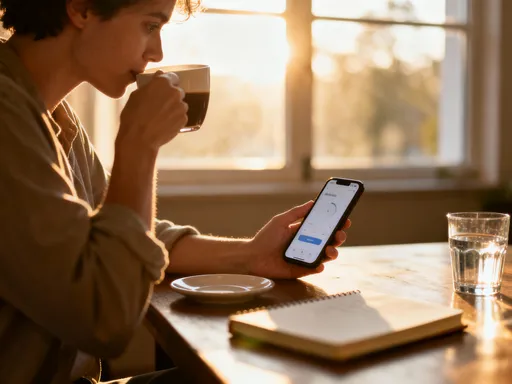
Try this: the next time you’re making coffee or packing lunches, say your grocery list out loud into your phone. “Milk, eggs, whole wheat bread, bananas.” See how fast it appears. No typing, no forgetting. Just speaking and saving.
Or, instead of texting a quick update, try recording a voice note first, then converting it to text. You’ll notice how much more personal it sounds. Later, you can edit it if needed—but at least the core message is captured.
I keep my voice-to-text tool ready at all times. When I’m walking the dog, I’ll dictate reminders: “Call the plumber about the leaky faucet.” When I’m driving, I’ll draft emails: “Hi team, please review the budget by Friday.” When I’m lying in bed before sleep, I’ll speak my thoughts: “I felt really proud today when the kids helped set the table without being asked.”
The goal isn’t perfection. It’s progress. Some days, the tool might mishear a word. That’s okay. You can edit it later. The important thing is that the idea is captured—before it fades. Over time, you’ll find yourself thinking more freely, expressing more fully, and writing with less effort. It’s not about replacing your voice. It’s about finally letting it be heard.
More Than a Tool—It Became My Daily Thinking Partner
Now, my voice-to-text assistant is more than just a way to write faster. It’s become a daily companion—a quiet witness to my thoughts, my hopes, my worries. I use it not just for tasks, but for reflection. At the end of the day, I’ll say, “What went well today?” and listen to my own voice play it back. Sometimes, I’ll add, “What could I do better?” or “What am I grateful for?”
Hearing my own voice reflect on my day has been surprisingly powerful. It’s like having a conversation with myself—without judgment, without pressure. I’ve started to notice patterns. I see what truly matters to me. I catch moments of joy I might have otherwise missed. And I’ve become more intentional about how I spend my time and energy.
It’s also deepened my connections. When I write birthday messages or thank-you notes using voice-to-text, they sound more heartfelt. My sister once told me, “This message felt like you were right here talking to me.” That’s the power of voice—it carries presence.
This tool didn’t just change how I write. It changed how I think. It reminded me that my voice has value—not just in conversations, but in my daily life. It’s not about doing more. It’s about expressing more of who I am, with less effort and more joy. And if that’s not the kind of technology worth embracing, I don’t know what is.