Tracked Every Coffee Purchase for 6 Months: What My Phone Revealed About My Habits
Have you ever wondered where your money really goes? I didn’t either—until a quiet Sunday afternoon when I opened a simple app on my phone and saw six months of my life laid out in colorful charts. A $3.50 coffee here, a forgotten subscription there—it all added up. What started as curiosity turned into a personal wake-up call. Technology didn’t judge me; it simply showed me the truth, quietly and clearly. I wasn’t reckless with money, or at least I didn’t think I was. But seeing those little daily choices stacked up side by side? That changed everything. It wasn’t about guilt. It was about awareness. And once I had that, I couldn’t unsee it.
The Moment I Stopped Ignoring My Spending
It was one of those slow Sunday afternoons—the kind where the house is quiet, the kids are playing quietly (a miracle, really), and I finally had a minute to myself. I was curled up on the couch with my favorite mug, sipping a homemade latte, when I remembered that finance app I’d downloaded months ago and never really used. Out of curiosity, I opened it. And there it was: six months of my financial life, neatly categorized, color-coded, and waiting for me to pay attention.
At first, I just scrolled. Groceries. Gas. Utilities. All expected. Then I saw it—the Coffee category. $427. That was the total. Over six months. An average of nearly $15 a week. I blinked. That couldn’t be right. Could it? I started tapping through the entries. Monday morning, 7:42 a.m.—$3.75 at the café near the school drop-off. Wednesday afternoon—$4.20 for an iced coffee after grocery shopping. Friday, on the way to my sister’s—another $3.95. It wasn’t every day. But it was often enough. And it wasn’t just coffee. There was a $12 salad here, a $9 tea there, a $6.50 parking fee I’d completely forgotten about. These weren’t big splurges. They were tiny leaks in a bucket I didn’t even realize had holes.
What hit me wasn’t the number itself. It was the realization that I hadn’t been *choosing* this. I wasn’t making a conscious decision to spend $427 on coffee. I was just… doing it. Habit. Convenience. A little treat. A moment of pause in a busy day. And over time, those moments had quietly reshaped my budget without me noticing. That Sunday afternoon wasn’t about panic or shame. It was about clarity. For the first time, I could see the invisible—the small, repeated actions that were shaping my financial reality. And once I saw it, I knew I could change it.
How My Phone Became a Mirror for My Choices
I used to think budgeting meant spreadsheets, manual entry, and a lot of guesswork. That’s why I’d avoided it for so long. But the app I was using didn’t ask me to do any of that. It connected securely to my bank account—nothing sketchy, nothing risky—and automatically pulled in every transaction. No typing. No remembering. Just real-time data, quietly organizing itself in the background. I didn’t have to *do* anything except look.
Each transaction was tagged—sometimes correctly, sometimes not—but I could easily fix it with a tap. That $12 salad? It had been labeled as “Dining Out,” but I changed it to “Groceries” because I’d bought it on the way home to share with the kids. That $9 tea? “Beverages.” The parking fee? “Transportation.” Slowly, the clutter turned into clarity. The app didn’t just show me *what* I was spending; it showed me *where* my money was going in a way I could actually understand.
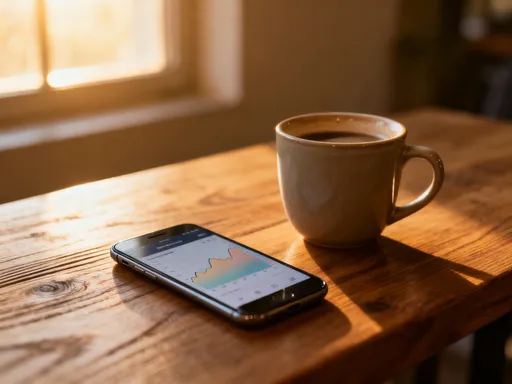
What surprised me most was how visual it all was. Instead of rows of numbers, I saw pie charts, bar graphs, trend lines. I could tap “Coffee” and see a weekly breakdown—spikes on busy mornings, dips on weekends. I could compare this month to last month. I could set a monthly goal and watch a little progress bar fill up. It wasn’t flashy. It wasn’t overwhelming. It was just… helpful. Like having a calm, patient friend quietly pointing things out without judgment.
And here’s the thing: I didn’t feel scolded. I felt seen. The app wasn’t shaming me for buying coffee. It was helping me understand my own behavior. It turned abstract habits—things I did without thinking—into something concrete, something I could reflect on. I started to notice patterns. I bought coffee most often on mornings when I was running late. I grabbed takeout when I was too tired to cook. I overspent on weekends when we had plans. The phone wasn’t controlling me. It was reflecting me. And that made all the difference.
The Surprise in the “Small Stuff” Category
If you’d asked me six months ago where my money went, I’d have said groceries, gas, and school supplies. I would’ve been wrong. The biggest surprise wasn’t the coffee. It was the “Miscellaneous” category—what the app called “Small Stuff.” $298 over six months. That’s almost $50 a month on things I didn’t even remember buying.
Looking deeper, I found a $7 magazine at the checkout. A $15 phone charger I didn’t need. A $12 kids’ toy from a vending machine at the grocery store. A $10 donation to a fundraiser I’d forgotten about. None of these were huge. But together? They added up to nearly a tank of gas. Or half a grocery run. Or a nice dinner out—if we’d planned it.
What made this so powerful wasn’t just the number. It was the emotional weight behind it. I realized I wasn’t just spending money—I was spending *intent*. I could’ve used that $298 to build a little emergency fund. To put toward a family outing. To save for a new kitchen gadget I’d been wanting. Instead, it had disappeared into a thousand tiny decisions I didn’t even remember making.
One evening, I showed my husband the “Small Stuff” chart. We sat together on the couch, laughing at first. “Was it really you who bought that glow-in-the-dark dinosaur?” I asked. “Hey, the kids loved it!” he said, grinning. But then we got quiet. “We could’ve saved that,” he said. “Or used it for something we really wanted.” That moment shifted something. It wasn’t about blame. It was about awareness. And once we both saw it, we started talking—really talking—about what mattered to us.
Teaching My Family to See the Invisible
Money conversations used to be stressful in our house. They felt heavy. Judgmental. Like someone was always doing something wrong. But this time was different. Because the data wasn’t personal. It wasn’t an accusation. It was just… information. Neutral. Clear. We started using the app’s family view—where we could both see the same dashboard, track shared goals, and celebrate progress together.
We set a goal: reduce “Small Stuff” spending by 30% over the next three months. Not because we were trying to deprive ourselves, but because we wanted to redirect that money toward something meaningful. We picked a weekend getaway—a cabin in the woods, just the four of us. No phones. No schedules. Just nature and connection.
Every week, we’d check in. Not as a test. Not as a lecture. Just a quick, five-minute chat over coffee. “How’d we do this week?” “I almost bought that fancy cheese at the store, but I walked away.” “I used a coupon for the kids’ haircuts.” We celebrated the wins. We laughed at the slip-ups. And slowly, something shifted. Spending became intentional. We weren’t just avoiding purchases—we were choosing differently. Together.
Even the kids got involved. We didn’t give them the app, of course, but we talked about it. “Remember how we saved $20 this week by packing lunches instead of buying out? That’s part of our cabin fund!” They started asking, “Is this going toward the cabin?” before grabbing a snack at the store. It wasn’t about restriction. It was about purpose. And that made all the difference.
Building Better Habits Without Willpower
I’ve tried budgeting before. I’ve made lists. Set rules. Promised myself I’d stop buying coffee. And every time, I’ve failed. Not because I didn’t care. Because willpower fades. Motivation runs out. Life gets busy. But this time was different. I wasn’t relying on discipline. I was using design.
The app had built-in tools that made good choices easier. I set up a weekly summary email—every Sunday morning, a gentle recap of the week’s spending. No drama. No guilt. Just a friendly update. “You spent $18 on coffee this week—slightly above average.” “Your grocery spending was down 10%—great job!” It felt like a check-in from a thoughtful friend.
I also turned on alerts. Not constant pings—just smart ones. For example, if I spent more than $20 on dining out in two days, I’d get a quiet notification: “You’ve had three takeout meals this week. Feeling overwhelmed? Maybe it’s time to meal prep.” It wasn’t scolding me. It was checking in. Like the app knew I was human.
One of my favorite features was the “Pause Before You Spend” reminder. If I was about to make a purchase over $25, the app would gently ask, “Is this aligned with your goals?” I didn’t always wait. But often, that one question made me pause. And sometimes, that was enough. I didn’t need more willpower. I just needed a little space to think.
When Data Met Emotion: Understanding the Why Behind the Spend
The numbers were helpful. But the real breakthrough came when I started asking *why*. Why did I buy that sweater I never wore? Why did I order takeout three nights in a row? The app didn’t tell me the answer. But it created the space to ask the question.
I started journaling—not every day, just once a week. I’d look at my spending report and pick one purchase that stood out. Then I’d write a few sentences about how I was feeling when I made it. The sweater? Bought during a tough week at work, when I felt invisible. The takeout? After a long day of managing sick kids and unanswered emails. The coffee runs? Almost always on mornings when I felt behind before the day even started.
This wasn’t about blaming myself. It was about understanding. I realized I was using small purchases as emotional shortcuts—tiny acts of comfort, control, or celebration. Nothing wrong with that. But when it happened on autopilot, it stopped serving me. Once I saw the pattern, I could make better choices. Instead of buying a latte to feel seen, I started texting a friend. Instead of ordering pizza out of exhaustion, I pulled out a frozen meal and called it “survival dinner”—and we all laughed.
Technology didn’t fix my emotions. But it helped me see where they were showing up in my wallet. And that awareness? That was priceless.
A Calmer, Clearer Life—One Transaction at a Time
Six months later, I’m not perfect. I still buy coffee. I still treat myself. I still forget to check the app sometimes. But something fundamental has changed. I’m no longer blind to my choices. I’m no longer living on financial autopilot.
The numbers tell part of the story. I’ve reduced my “Small Stuff” spending by 40%. I’ve built a $500 emergency buffer. We took that cabin trip—and it was everything we hoped for. But the real wins aren’t in the data. They’re in the quiet moments. The deep breath when I realize I’m not stressed about money this month. The shared smile with my husband when we hit a savings goal. The pride when my daughter says, “We’re so close to our next trip!”
Technology didn’t take over my life. It helped me reclaim it. It didn’t restrict me—it gave me freedom. The freedom to spend intentionally. The freedom to save without guilt. The freedom to enjoy the small things because I’m no longer afraid of where they’re leading.
If you’ve ever felt like your money slips through your fingers, I get it. But here’s what I’ve learned: you don’t need more willpower. You don’t need a perfect budget. You just need a little visibility. A little kindness. And a tool that helps you see yourself clearly—not to change who you are, but to live more fully as the person you already are. My phone didn’t judge me. It helped me grow. And that, more than anything, is what made the difference.